Schlagwortarchiv für: Seattle

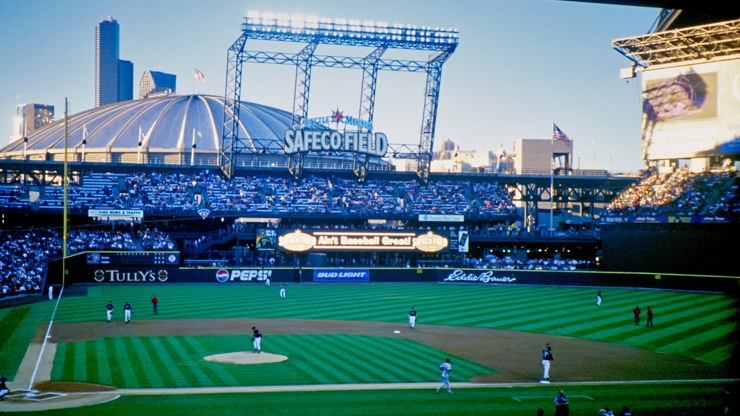
Das Safeco Field (seit 1.1.2019 T-Mobile Park) ist die Heimstätte des MLB Teams der Seattle Mariners. Namensgeber des Stadions war seit 1998 die Safeco Insurance, ein Versicherungsunternehmen mit Sitz in Seattle. Das Stadion hat ein Fassungsvermögen von 47.934 Zuschauern (ausschließlich Sitzplätze) und ein schließbares Dach. Die Gesamtbaukosten betrugen bis zur Eröffnung 517,6 Mio. US-Dollar, damit war Safeco Field zu diesem Zeitpunkt das teuerste Baseballstadion der Welt. Der Bau des Stadions gegen den Widerstand eines Teils der Stadtgesellschaft war nur möglich aufgrund der Erfolge des Teams in den Jahren ab 1995 (erstmaliger Gewinn der Division und Sieg gegen die New York Yankees in der ALDS), angeführt vom Starspieler Ken Griffey Jr. Deswegen trägt das Stadion den Beinamen “The House that Griffey built”. Eröffnet wurde es nach zwei Jahren Bauzeit am 15. Juli 1999 mit dem Spiel der Mariners gegen die San Diego Padres.

Safeco Field dient dem Team als Nachfolger für den Kingdome, einem Stadion mit geschlossenem Kuppeldach, das bis zum Jahr 2000 direkt nördlich an das neue Stadion angrenzte. Die 1976 eingeweihte Arena ist bis heute das einzige Stadion in dem die All-Star-Spiele der drei großen Ligen NFL, NBA und MLB ausgetragen wurden. Zwischen 1976 und 2000 besuchten rund 73 Millionen Menschen zu Veranstaltungen das Mehrzweckstadion. Im Jahr 2000 wurde der Kingdome schließlich aufgrund von Bedenken bezüglich der Standsicherheit des Gebäudes bei Erdbeben abgerissen. Am Ort des ehemaligen King Dome befindet sich seit 2002 das bis zu 72.000 Zuschauer fassende CenturyLink Field, das Heimstadion der Seattle Seahawks (NFL) und der Seattle Sounders (MLS).

Die Fotos entstanden bei mehreren Aufenthalten in Seattle zwischen 1992 und 2003 und zeigen den Kingdome (1992 und 1999), die Baustelle des Safeco Field im Frühjahr 1999 sowie die Situation nach Eröffnung des benachbarten Footballstadions (2002).

[lightbox_gallery columns=”3″ size=”” hover_zoom=”yes”]
[image src=”https://thomas-ott.net/home/wp-content/uploads/2019/01/gly_safecofield-1.jpg” alt=””]
[image src=”https://thomas-ott.net/home/wp-content/uploads/2019/01/gly_safecofield-2.jpg” alt=””]
[image src=”https://thomas-ott.net/home/wp-content/uploads/2019/01/gly_safecofield-3.jpg” alt=””]
[image src=”https://thomas-ott.net/home/wp-content/uploads/2019/01/gly_safecofield-4.jpg” alt=””]
[image src=”https://thomas-ott.net/home/wp-content/uploads/2019/01/gly_safecofield-5.jpg” alt=””]
[image src=”https://thomas-ott.net/home/wp-content/uploads/2019/01/gly_safecofield-6.jpg” alt=””]
[image src=”https://thomas-ott.net/home/wp-content/uploads/2019/01/gly_safecofield-7.jpg” alt=””]
[image src=”https://thomas-ott.net/home/wp-content/uploads/2019/01/gly_safecofield-8.jpg” alt=””]
[image src=”https://thomas-ott.net/home/wp-content/uploads/2019/01/gly_safecofield-9.jpg” alt=””]
[image src=”https://thomas-ott.net/home/wp-content/uploads/2019/01/gly_safecofield-10.jpg” alt=””]
[image src=”https://thomas-ott.net/home/wp-content/uploads/2019/01/gly_safecofield-11.jpg” alt=””]
[image src=”https://thomas-ott.net/home/wp-content/uploads/2019/01/gly_safecofield-12.jpg” alt=””]
[/lightbox_gallery]
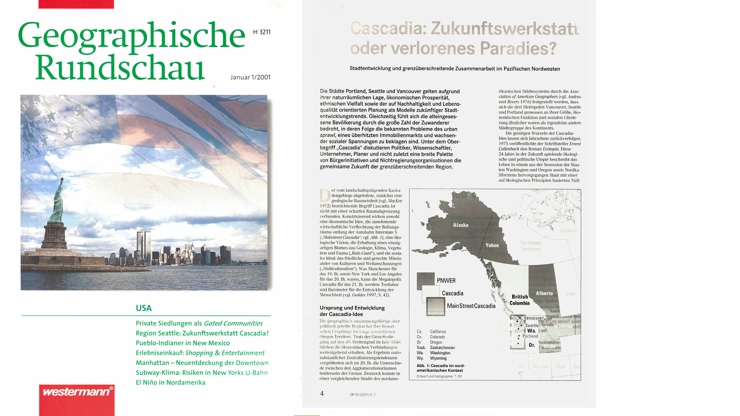
OTT, Thomas (2001): Cascadia: Zukunftswerkstatt oder verlorenes Paradies? Stadtentwicklung und grenzüberschreitende Zusammenarbeit im pazifischen Nordwesten. Geographische Rundschau 53 (1), 4-11

Kurzfassung

Due to their scenic natural location, economic prosperity, ethnic variety, as weil as a planning policy that aims for sustainability and quality of life, the ci­ties of Portland, Seattle, and Vancouver may serve as role models for future ur­ban development trends. However, the region is under threat by a rising num­ber of immigrants, both from overseas as weil as from other states or provinces. This process in turn fosters the well­known problems of urban sprawl, rising real estate prices, and increasing social tensions. Under the heading “Cascadia” politicians, academics, business people, planners, and not the least a broad range of initiatives and NGOs discuss the fu­ture of the region. Cascadia is based on three ideas: in economic terms it deals with the increasing interconnections of the metropolitan areas along lnterstate 5 (“Mainstreet Cascadia”); ecological goal is the preservation of a unique biome of geology, climate, vegetation, and wild­life (“Raincoast”); the social ideal is a peaceful and fair coexistence of different cultures (“Multiculturalism”).

Volltext

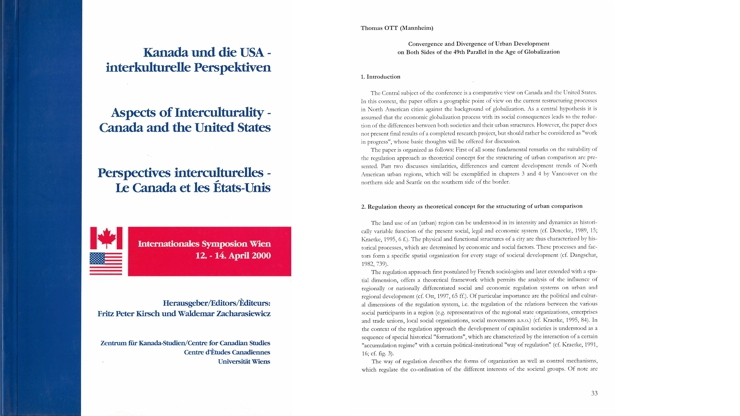
OTT, Thomas (2001): Convergence and divergence of urban development on both sides of the 49th parallel in the age of globalization. In: KIRSCH, F.P. / ZACHARASIEWICZ, W. (Eds.): Kanada und die USA – interkulturelle Perspektiven / Aspects of Interculturality – Canada and the United States / Perspectives interculturelles – Le Canada et les Etats-Unis, Vienna, 33-50

Kurzfassung

Am Beispiel der Städte Vancouver und Seattle untersucht der Vortrag Gemeinsamkeiten und Unterschiede kanadischer und U.S.-amerikanischer Städte. Als Ausgangshypothese wird dabei unterstellt, dass der ökonomische Globalisierungsprozess mit seinen sozialen Folgen zu einer Verringerung der Unterschiede zwischen beiden Gesellschaftssystemen und ihren räumlichen (Stadt-)Strukturen führt. Da beide Städte zahlreiche Gemeinsamkeiten aufweisen, ist es möglich, konvergente und divergente Faktoren der Stadtentwicklung zu identifizieren, ohne dass der Vergleich durch externe Einflüsse behindert wird. Als theoretischer Analyserahmen dient der Regulationsansatz, der eine Einbettung der Stadtentwicklungsprozesse in lokale wie globale ökonomische und soziale Akkumulations- und Regulationszusammenhänge erlaubt.

Volltext

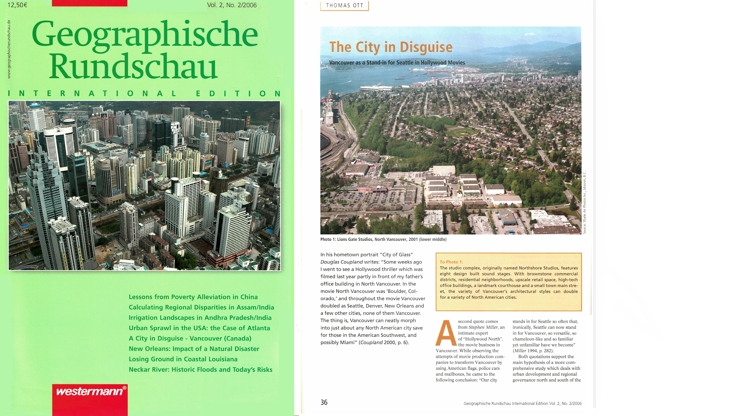
OTT, Thomas (2006): The City in Disguise: Vancouver as a Stand-in for Seattle in Hollywood Movies. Geographische Rundschau International Edition 2 (2), 36-43

Kurzfassung

Pressed by declining profits and ballooning expenses at home, Hollywood has shifted production abroad, particularly the production of low-budget movies made for television. Most are made in Canada, where a weak currency, financial incentives and proximity to the United States make production relatively inexpensive and convenient. Especially Vancouver, British Columbia, has developed into a major location for movie production; the city has become known in the industry as “Hollywood North”. Major studios and independent producers alike are attracted to Vancouver by the abundance of spectacular locations, the highly experienced production teams, the pool of talented local actors and the state-of-the-art post production facilities. However, despite its role as a set for major Hollywood movies, the city is hardly ever identified as itself. It rather acts as a stand-in for American cities, especially Seattle. This process of reducing Vancouver into a mere backdrop by neglecting space and place as a source of stories and characters is fostered by American production companies and the British Columbia Film Commission alike. The scenery of the built urban fabric obstructs, however, the view on inherited, more fundamental differences in social and cultural structures and processes between Canadian and American cities.

Volltext

Projektbeschreibung

Am Beispiel der Städte Vancouver und Seattle untersuchte dieses unvollendet gebliebenen Habilitationsprojekt die Frage nach Gemeinsamkeiten und Unterschieden kanadischer und U.S.-amerikanischer Städte. Als Ausgangshypothese wurde dabei unterstellt, dass der ökonomische Globalisierungsprozess mit seinen sozialen Folgen zu einer Verringerung der Unterschiede zwischen beiden Gesellschaftssystemen und ihren räumlichen (Stadt-) Strukturen führt. Da beide Städte zahlreiche Gemeinsamkeiten aufweisen, war es möglich, konvergente und divergente Faktoren der Stadtentwicklung zu identifizieren, ohne dass der Vergleich durch externe Einflüsse behindert wurde. Als theoretischer Analyserahmen diente der Regulationsansatz, der eine Einbettung der Stadtentwicklungsprozesse in lokale wie globale ökonomische und soziale Akkumulations- und Regulationszusammenhänge erlaubt.

Veröffentlichungen

Vortragspräsentationen

the quick brown fox