[columns_row margin_top=”0px” margin_bottom=”0px”]
[column size=”one_half” last=”no”]
[/column]
[column size=”one_half” last=”yes”]
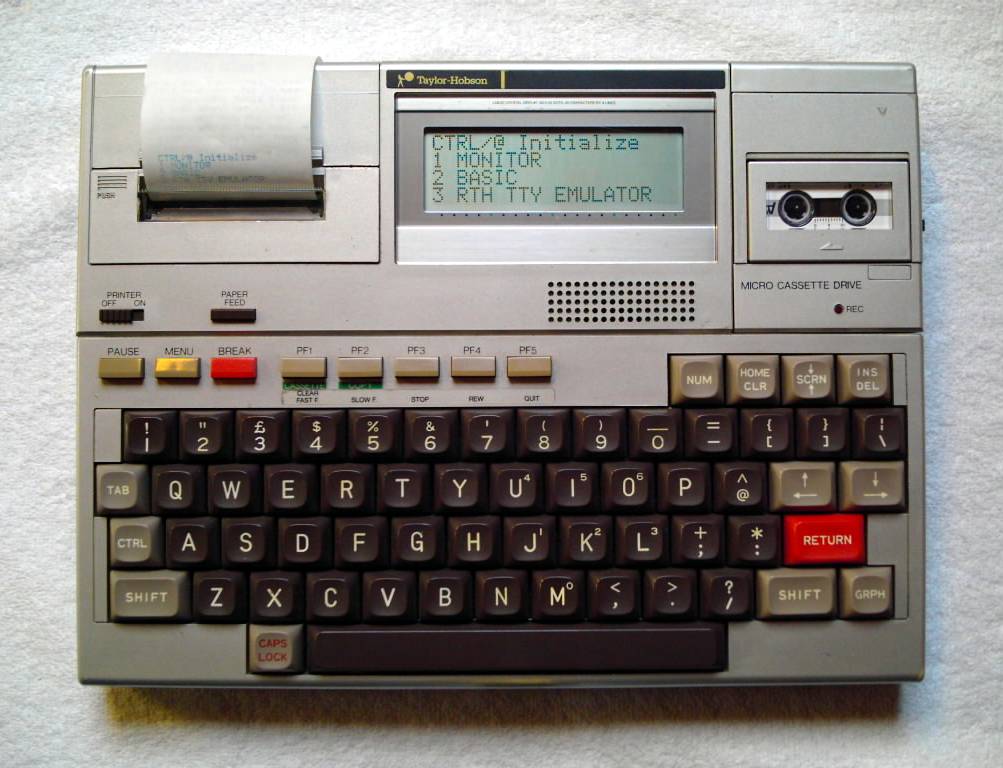
EPSON HX-20
- 2x Hitachi 6301 CPU @ 614 kHz
- 16 kB RAM, erweiterbar auf 32 kB
- 32 kB ROM mit BASIC Interpreter
- 120×32 LCD Display
- eingebauter Drucker, eingebautes Microkassettenlaufwerk, RS232 Schnittstelle
- Nickel-Cadmium Batterie
- 290x215x44 mm, 1.6 kg
[/column]
[/columns_row]
[divider style=”single” align=”center” color=”darky” opacity=”1.00″ width=”” pull=”” padding_top=”20px” padding_bottom=”20px”]
[columns_row margin_top=”0px” margin_bottom=”0px”]
[column size=”one_half” last=”no”]

[/column]
[column size=”one_half” last=”yes”]
ATARI 520 ST
- Motorola 68000 @ 8MHz
- 512 Kb RAM
- Atari TOS/GEM
- 320×200 16 Farben, 640×200 4 Farben, 640×400 Monochrom
- eternes 3,5″ 360 Kb Diskettenlaufwerk
- RGB, cartridge, parallel, serial, HD floppy drive, MIDI (2), joystick, mouse
[/column]
[/columns_row]
[divider style=”single” align=”center” color=”darky” opacity=”1.00″ width=”” pull=”” padding_top=”20px” padding_bottom=”20px”]
[columns_row margin_top=”0px” margin_bottom=”0px”]
[column size=”one_half” last=”no”]
[/column]
[column size=”one_half” last=”yes”]
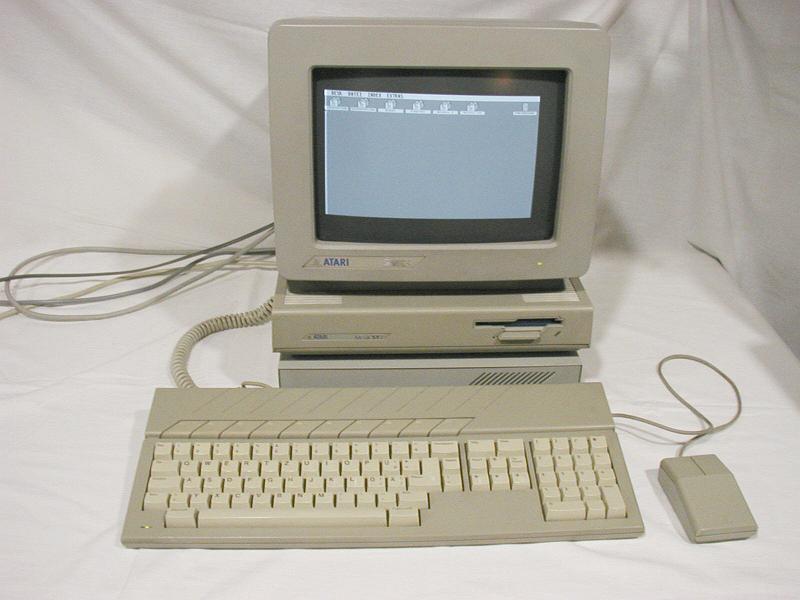
ATARI Mega ST 2
[/column]
[/columns_row]
[divider style=”single” align=”center” color=”darky” opacity=”1.00″ width=”” pull=”” padding_top=”20px” padding_bottom=”20px”]
[columns_row margin_top=”0px” margin_bottom=”0px”]
[column size=”one_half” last=”no”]

[/column]
[column size=”one_half” last=”yes”]
TOSHIBA T1100Plus
- Intel 80C86 @7.16 MHz (auf 4.77 MHz schaltbar)
- 640 KB RAM
- MS-DOS 3.2
- Zwei eingebaute 720 KB 3,5″ Diskettenlaufwerke, keine Festplatte
- 640 x 200 Monochromdisplay, externe IBM kompatible CGA Schnittstelle
- RS·232C serial, Centronics parallel (printer)
- 307 x 305 x 66 mm, 4,5 kg
[/column]
[/columns_row]
[divider style=”single” align=”center” color=”darky” opacity=”1.00″ width=”” pull=”” padding_top=”20px” padding_bottom=”20px”]
[columns_row margin_top=”0px” margin_bottom=”0px”]
[column size=”one_half” last=”no”]
[/column]
[column size=”one_half” last=”yes”]
TOSHIBA T3100
[/column]
[/columns_row]
[divider style=”single” align=”center” color=”darky” opacity=”1.00″ width=”” pull=”” padding_top=”20px” padding_bottom=”20px”]
[columns_row margin_top=”0px” margin_bottom=”0px”]
[column size=”one_half” last=”no”]
[/column]
[column size=”one_half” last=”yes”]
DELL (1)
[/column]
[/columns_row]
[divider style=”single” align=”center” color=”darky” opacity=”1.00″ width=”” pull=”” padding_top=”20px” padding_bottom=”20px”]
[columns_row margin_top=”0px” margin_bottom=”0px”]
[column size=”one_half” last=”no”]
[/column]
[column size=”one_half” last=”yes”]
DELL Precision M4400
| Andere Teile, |
| ,Teilenummer,Beschreibung,Menge |
| ,DW588,”PROCESSOR, P8600, 2.4, 3MB, CPEN, 25W, M0″,1 |
| ,G631D,”ASSEMBLY, DVD+/-RW, 8, Serial ATA, EMOD, PANASONIC”,1 |
| “LIQUID CRYSTAL DISPLAY, 15.4WUXGA, 2-CCFL, SAMSUNG”,1 |
| ,K850F,”HARD DRIVE, 250GB, FREE FALL SENSOR, 9.5, 7.2K, SGT-CAS”,1 |
[/column]
[/columns_row]
[divider style=”single” align=”center” color=”darky” opacity=”1.00″ width=”” pull=”” padding_top=”20px” padding_bottom=”20px”]
[columns_row margin_top=”0px” margin_bottom=”0px”]
[column size=”one_half” last=”no”]
[/column]
[column size=”one_half” last=”yes”]
DELL Precision M4600
| ,190DF,”SSDR, 128, S2, FULL, MCARD, PM810″,1 |
| ,2VKDW,”PROCESSOR, I7-2820QM, 2.3, 4C, SNB, D2, P”,1 |
| ,MC6JN,”LIQUID CRYSTAL DISPLAY, 15.6FHD, WLED, LVDS, AG, Z, LEGEND”,1 |
| ,R61T8,”DVD+/-RW, 8X, 9.5, Serial ATA, TRAY, TOSHIBA SAMSUNG STORAGE TECHNOLOGY”,1 |
| ,R6KNT,”HARD DRIVE, Pentium M Dothan, 1.86GHZ, 2 MEGB, 533FSB, S2, 7.2, 2.5, 512E, DRU”,1 |
| ,WJCJD,”CARD (CIRCUIT), WIRELESS, 375, BLUETOOTH, LATIN/LATIN AMERICA, HF”,1 |
| ,X830D,”DUAL IN-LINE MEMORY MODULE, 4GB, 1333MHZ, 512X64, 8K, 204″,4 |
| 213-13256,”Prozessor : Ein Intel Core i7-2820QM (2,30GHz, 8MB Cache, Quad Core)” |
| 230-11907,Display : 39.6cm (15.6in) Full High Definition (1920×1080) LED-backlit LCD Panel |
| 370-16495,Arbeitsspeicher : 16GB(4x4GB)1333MHz DDR3 Dual Channel |
| 400-22468,Festplatte : 128GB Solid State Festplatte Minikarte |
| 401-12973,Additional Hard Drive : 750GB Serial ATA (7.200 Rpm) |
| 429-15788,Optisches Laufwerk : 8x DVD+/-RW Schubladenlaufwerk ohne Software |
| 451-11659,Akku : Hauptakku 9 Zellen 97Wh |
| 490-12713,Grafik : NVIDIA Quadro 2000M mit 2GB GDDR3 |
| 555-13675,Wireless : EMEA Intel Pro Wireless 6300 (802.11 a/b/g/n 3X3) Minikarte |
| 555-13679,Bluetooth : Dell 375 Bluetooth Karte |
| 583-14815 |
| 619-32185,Operating System : Windows 7 Ultimate (64Bit) German |
[/column]
[/columns_row]
[divider style=”single” align=”center” color=”darky” opacity=”1.00″ width=”” pull=”” padding_top=”20px” padding_bottom=”20px”]
[columns_row margin_top=”0px” margin_bottom=”0px”]
[column size=”one_half” last=”no”]
[/column]
[column size=”one_half” last=”yes”]
MICROSOFT Surface Book
[/column]
[/columns_row]
[divider style=”single” align=”center” color=”darky” opacity=”1.00″ width=”” pull=”” padding_top=”20px” padding_bottom=”20px”]
[columns_row margin_top=”0px” margin_bottom=”0px”]
[column size=”one_half” last=”no”]
[/column]
[column size=”one_half” last=”yes”]
LENOVO
[/column]
[/columns_row]
[divider style=”single” align=”center” color=”darky” opacity=”1.00″ width=”” pull=”” padding_top=”20px” padding_bottom=”20px”]
[columns_row margin_top=”0px” margin_bottom=”0px”]
[column size=”one_half” last=”no”]
[/column]
[column size=”one_half” last=”yes”]
DELL Inspiron Duo
[/column]
[/columns_row]
[divider style=”single” align=”center” color=”darky” opacity=”1.00″ width=”” pull=”” padding_top=”20px” padding_bottom=”20px”]
[columns_row margin_top=”0px” margin_bottom=”0px”]
[column size=”one_half” last=”no”]
[/column]
[column size=”one_half” last=”yes”]
AMAZON Fire HD8 (2017)
[/column]
[/columns_row]
[divider style=”single” align=”center” color=”darky” opacity=”1.00″ width=”” pull=”” padding_top=”20px” padding_bottom=”20px”]
Amazon Fire HD8
Technische Daten Fire HD 8 (2017)
| Name |
Fire HD 8 (2017) |
|
|
|
|
| Abmessungen (HxBxT) |
214 x 128 x 9,7 Millimeter |
| Gewicht |
369 Gramm |
|
|
| Betriebssystem |
| Betriebssystem |
Fire OS 5 |
|
|
[columns_row margin_top=”0px” margin_bottom=”0px”]
[column size=”one_half” last=”no”]

[/column]
[column size=”one_half” last=”yes”]
SIEMENS E10D
[/column]
[/columns_row]
[divider style=”single” align=”center” color=”darky” opacity=”1.00″ width=”” pull=”” padding_top=”20px” padding_bottom=”20px”]
[columns_row margin_top=”0px” margin_bottom=”0px”]
[column size=”one_half” last=”no”]
[/column]
[column size=”one_half” last=”yes”]
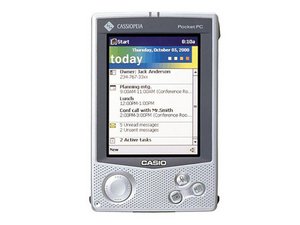
CASIO Cassiopeia E-125G
- Microsoft Windows CE 3.0 PocketPC edition
- NEC VR4122 MIPS @ 150 MHz
- 32 MB RAM, 16 MB ROM
- HAST LCD, 240 × 320 Pixel, 65536 Farben
- 81,2 mm × 132 mm × 20,1 mm, 256 g
- Seriell/USB, IrDA (ver. 1.2), CompactFlash Type I/II
- Li-Ion-Akku, bis zu 6 Stunden Laufzeit; zusätzlich CR2032 als Sicherung
- Touch-Screen (Stift), Mikrofon, 3 frei belegbare Knöpfe, eine 3-Wege-Taste, Aufnahmetaste und ein Steuerkreuz.
- Lautsprecher und Stereo-3,5-mm-Klinke
[/column]
[/columns_row]
[divider style=”single” align=”center” color=”darky” opacity=”1.00″ width=”” pull=”” padding_top=”20px” padding_bottom=”20px”]
[columns_row margin_top=”0px” margin_bottom=”0px”]
[column size=”one_half” last=”no”]

[/column]
[column size=”one_half” last=”yes”]
DELL Venue Pro
- Microsoft Windows CE 3.0 PocketPC edition
|
|
| Abmessungen (HxBxT) |
121,6 x 64,4 x 14,9 Millimeter |
| Gewicht |
190 Gramm |
| Gerätefarben |
Schwarz/Silber |
|
[/column]
[/columns_row]
[divider style=”single” align=”center” color=”darky” opacity=”1.00″ width=”” pull=”” padding_top=”20px” padding_bottom=”20px”]
[columns_row margin_top=”0px” margin_bottom=”0px”]
[column size=”one_half” last=”no”]
[/column]
[column size=”one_half” last=”yes”]
SAMSUNG ATIV S
[/column]
[/columns_row]
[divider style=”single” align=”center” color=”darky” opacity=”1.00″ width=”” pull=”” padding_top=”20px” padding_bottom=”20px”]
[columns_row margin_top=”0px” margin_bottom=”0px”]
[column size=”one_half” last=”no”]
[/column]
[column size=”one_half” last=”yes”]
MICROSOFT Lumia 950
| Abmessungen (HxBxT) |
145 x 73,2 x 8,2 Millimeter |
| Gewicht |
150 Gramm |
| Betriebssystem |
Windows 10 |
| Benutzeroberfläche |
aus Betriebssystem |
[/column]
[/columns_row]
[divider style=”single” align=”center” color=”darky” opacity=”1.00″ width=”” pull=”” padding_top=”20px” padding_bottom=”20px”]
[columns_row margin_top=”0px” margin_bottom=”0px”]
[column size=”one_half” last=”no”]
[/column]
[column size=”one_half” last=”yes”]
SAMSUNG Galaxy S8
[/column]
[/columns_row]