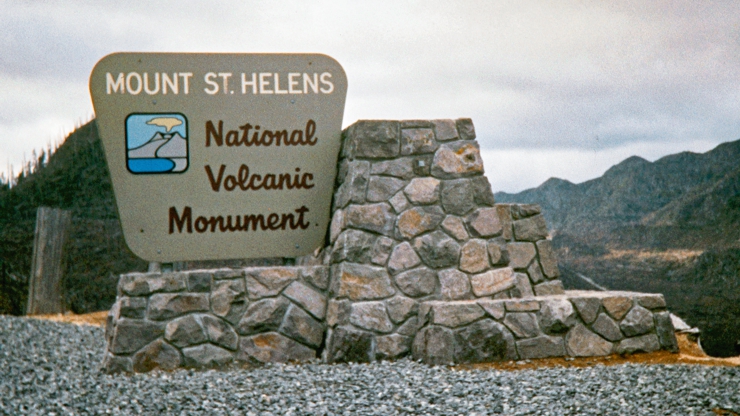
Mount St. Helens
Der Mount St. Helens liegt im pazifischen Nordwesten der Vereinigten Staaten etwa 50 km westlich des Mount Adams, 80 km südsüdwestlich des Mount Rainier und rund 100 km nordnordwestlich des Mount Hood, den markantesten Vulkanen des nördlichen, in den Bundesstaaten Washington und Oregon gelegenen Teils der Kaskadenkette. Die Entfernung nach Seattle beträgt etwa 160 km Luftlinie. Portland in Oregon ist rund 80 km Luftlinie entfernt.
Der Ausbruch des Mount St. Helens am 18. Mai 1980 war einer der stärksten Vulkanausbrüche des 20. Jahrhunderts. In geringer Tiefe unterhalb des Gipfels eindringendes Magma verursachte eine Auswölbung und ein Netz von Rissen an der Nordseite des Berges – was bereits vor dem eigentlichen Ausbruch eine Serie von Erdbeben und explosionsartigen Dampfaustritten bewirkte. Am 18. Mai 1980 rutschte infolge eines solchen Erdbebens (5,1 auf der Richterskala) die gesamte Nordflanke des Berges lawinenartig ab. Die Höhe des Mount St. Helens reduzierte sich innerhalb von Sekunden von 2.950 auf 2.549 Meter, ein hufeisenförmiger Krater mit 1,6 Kilometern Durchmesser blieb zurück. Durch das Abrutschen der Bergspitze war das mit Gas und komprimiertem Dampf angereicherte Magma des Vulkans plötzlich einem stark verringerten Umgebungsdruck ausgesetzt. Die Folge war die Freisetzung eines gewaltigen pyroklastischen Stroms aus gasreichem, flüssigem Magma, der sich schnell genug in Richtung des nahe gelegenen Spirit Lake bewegte, um die Gerölllawine in kürzester Zeit zu überholen und verheerende Schäden in der Umgebung zu verursachen.
Die beim Ausbruch entstandene und bis zu 15 Kilometer in die Atmosphäre emporgestiegene Säule aus Vulkanasche verteilte Asche über elf US-Bundesstaaten. Zur gleichen Zeit schmolzen auf dem Berg Schnee, Eis und sogar vollständige Gletscher und lösten vulkanische Schlammströme (Lahare) aus, die bis in den über 50 Kilometer entfernten Columbia River reichten. Die folgenden Eruptionen waren weitaus weniger stark, jedoch fanden im Laufe des Jahres noch weitere größere Ausbrüche statt. Obschon zuvor eine Sicherheitszone um den Vulkan errichtet worden war, starben durch den Ausbruch des 18. Mai insgesamt 57 Menschen und tausende Tiere, zudem verwandelten Asche und Lahare hunderte Quadratkilometer in Ödland. Der Gesamtschaden betrug mehr als eine Milliarde US-Dollar.
Für die Vulkanologie war und ist der Ausbruch des Mount St. Helens von großer Bedeutung: Er ereignete sich in einem gut zugänglichen Gebiet und in einem Land, das über ausreichend finanzielle Mittel und wissenschaftliche Ressourcen verfügte, um den Vulkan bereits nach ersten Anzeichen vulkanischer Aktivitäten von einem Team qualifizierter Wissenschaftler beobachten und analysieren zu lassen.
Die Fotos (digitalisierte Diapositive) entstanden bei meinem ersten Besuch 12 Jahre nach dem Ausbruch. 20 Jahre nach der Eruption kam ich zusammen mit einer Exkursionsgruppe ein zweites Mal zu diesem Feuerberg.
1992
[lightbox_gallery columns=”3″ size=”” hover_zoom=”yes”]
[image src=”https://thomas-ott.net/home/wp-content/uploads/2018/12/gly_MtStHelens92_28.jpg” alt=””]
[image src=”https://thomas-ott.net/home/wp-content/uploads/2018/12/gly_MtStHelens92_29.jpg” alt=””]
[image src=”https://thomas-ott.net/home/wp-content/uploads/2018/12/gly_MtStHelens92_30.jpg” alt=””]
[image src=”https://thomas-ott.net/home/wp-content/uploads/2018/12/gly_MtStHelens92_31.jpg” alt=””]
[image src=”https://thomas-ott.net/home/wp-content/uploads/2018/12/gly_MtStHelens92_01.jpg” alt=””]
[image src=”https://thomas-ott.net/home/wp-content/uploads/2018/12/gly_MtStHelens92_02.jpg” alt=””]
[image src=”https://thomas-ott.net/home/wp-content/uploads/2018/12/gly_MtStHelens92_03.jpg” alt=””]
[image src=”https://thomas-ott.net/home/wp-content/uploads/2018/12/gly_MtStHelens92_04.jpg” alt=””]
[image src=”https://thomas-ott.net/home/wp-content/uploads/2018/12/gly_MtStHelens92_05.jpg” alt=””]
[image src=”https://thomas-ott.net/home/wp-content/uploads/2018/12/gly_MtStHelens92_06.jpg” alt=””]
[image src=”https://thomas-ott.net/home/wp-content/uploads/2018/12/gly_MtStHelens92_07.jpg” alt=””]
[image src=”https://thomas-ott.net/home/wp-content/uploads/2018/12/gly_MtStHelens92_08.jpg” alt=””]
[image src=”https://thomas-ott.net/home/wp-content/uploads/2018/12/gly_MtStHelens92_09.jpg” alt=””]
[image src=”https://thomas-ott.net/home/wp-content/uploads/2018/12/gly_MtStHelens92_10.jpg” alt=””]
[image src=”https://thomas-ott.net/home/wp-content/uploads/2018/12/gly_MtStHelens92_11.jpg” alt=””]
[image src=”https://thomas-ott.net/home/wp-content/uploads/2018/12/gly_MtStHelens92_12.jpg” alt=””]
[image src=”https://thomas-ott.net/home/wp-content/uploads/2018/12/gly_MtStHelens92_13.jpg” alt=””]
[image src=”https://thomas-ott.net/home/wp-content/uploads/2018/12/gly_MtStHelens92_14.jpg” alt=””]
[image src=”https://thomas-ott.net/home/wp-content/uploads/2018/12/gly_MtStHelens92_15.jpg” alt=””]
[image src=”https://thomas-ott.net/home/wp-content/uploads/2018/12/gly_MtStHelens92_16.jpg” alt=””]
[image src=”https://thomas-ott.net/home/wp-content/uploads/2018/12/gly_MtStHelens92_17.jpg” alt=””]
[image src=”https://thomas-ott.net/home/wp-content/uploads/2018/12/gly_MtStHelens92_18.jpg” alt=””]
[image src=”https://thomas-ott.net/home/wp-content/uploads/2018/12/gly_MtStHelens92_19.jpg” alt=””]
[image src=”https://thomas-ott.net/home/wp-content/uploads/2018/12/gly_MtStHelens92_20.jpg” alt=””]
[image src=”https://thomas-ott.net/home/wp-content/uploads/2018/12/gly_MtStHelens92_21.jpg” alt=””]
[image src=”https://thomas-ott.net/home/wp-content/uploads/2018/12/gly_MtStHelens92_22.jpg” alt=””]
[image src=”https://thomas-ott.net/home/wp-content/uploads/2018/12/gly_MtStHelens92_23.jpg” alt=””]
[image src=”https://thomas-ott.net/home/wp-content/uploads/2018/12/gly_MtStHelens92_24.jpg” alt=””]
[image src=”https://thomas-ott.net/home/wp-content/uploads/2018/12/gly_MtStHelens92_25.jpg” alt=””]
[image src=”https://thomas-ott.net/home/wp-content/uploads/2018/12/gly_MtStHelens92_26.jpg” alt=””]
[/lightbox_gallery]
2000
[lightbox_gallery columns=”3″ size=”” hover_zoom=”yes”]
[image src=”https://thomas-ott.net/home/wp-content/uploads/2018/12/gly_MtStHelens00_5.jpg” alt=””]
[image src=”https://thomas-ott.net/home/wp-content/uploads/2018/12/gly_MtStHelens00_6.jpg” alt=””]
[image src=”https://thomas-ott.net/home/wp-content/uploads/2018/12/gly_MtStHelens00_7.jpg” alt=””]
[image src=”https://thomas-ott.net/home/wp-content/uploads/2018/12/gly_MtStHelens00_3.jpg” alt=””]
[image src=”https://thomas-ott.net/home/wp-content/uploads/2018/12/gly_MtStHelens00_2.jpg” alt=””]
[image src=”https://thomas-ott.net/home/wp-content/uploads/2018/12/gly_MtStHelens00_4.jpg” alt=””]
[image src=”https://thomas-ott.net/home/wp-content/uploads/2018/12/gly_MtStHelens00_9.jpg” alt=””]
[image src=”https://thomas-ott.net/home/wp-content/uploads/2018/12/gly_MtStHelens00_8.jpg” alt=””]
[image src=”https://thomas-ott.net/home/wp-content/uploads/2018/12/gly_MtStHelens00_1.jpg” alt=””]
[image src=”” alt=””]
[/lightbox_gallery]